Monday, 29 December 2014

The Return of Sierra

When Ken and Roberta Williams were awarded with their honorary award at the video game awards at the start of December, it is likely that the vast majority of modern gamers asked a collective “who?”. The same could sadly also be said for many gamers earlier this year when Activision announced that hey would be reviving Sierra as a publishing arm of the company. Many who actually did recognise the name of Sierra were more likely to associate it with such forgettable titles as Timeshift, or the terrible Leisure Suit Larry console games that were released in the early 2000s – a publisher responsible for out-sourcing unsuccessful titles.
But the Sierra On-Line that I (and many other longtime gaming fans) remember was a very different company. Founded by the aforementioned husband and wife team back in 1979, Sierra became synonymous with the graphic adventure genre – being the first company to actually combine graphics with traditional text-based adventure games. The company was built on the success of King’s Quest – the brainchild of Roberta – although many more hits followed in its wake, such as the Police Quest series, many Space Quest titles and the risqué Leisure Suit Larry series.
By adding an on-screen character sprite to a graphic adventure game for the first time, King’s Quest revolutionised the genre. It was a death knell of classic text-based adventures, and that sub-genre was soon forgotten. The SCI game engine Sierra developed especially for King’s Quest allowed players to directly control the movement of their protagonist through different scenes in the game world, gathering items, speaking to other characters and solving puzzles using a simple text parser system. USE BROOM, GET SWORD or LOOK AT MAN was about as advanced as it got, but this was the most interactive adventure that gamers had ever experienced at the time.
Sierra logo
The titles published by Sierra were full of humour, suspense and action, whether that be trying to silently escape from a band of Space Pirates, attempting to win the heart of the girl of your dreams, or writing up a speeding ticket for a small-time criminal. These games immersed the player in another world and let you take on the role of hero, wannabe-lothario or beat cop, for instance. They were also really challenging titles. The company garnered a reputation for creating difficult games where death lurked around every corner if you weren’t careful (often even if you were).
The idea of save early, save often was spawned – whereby players knew they should create multiple save games throughout a game, just in case they made a mistake and didn’t want to lose too much progress. There were a lot of irritating sequences and painful dead-ends in Sierra games, that not only became their trademark but also one of their selling points. Players wanted to see how many crazy ways their character could be killed and what humorous reprimands they might be treated to as they failed yet again. And the protagonists were so likeable – even when they were losers – that gamers cared what was going to happen in their story, and wanted to play the next chapter.
Sierra were innovators, and never wanted to stay still. Their adventure games moved to point and click mouse control shortly after the technology caught on, and were one of the first development studios to create games entirely using entire voice casts, or full motion video (back when FMV was thought of as impressive and new, rather than clunky and silly) with titles like Phantasmagoria – the first million-selling video game ever made. Even when the rise of 3D gaming seemed to cause a decline in adventure games in the late nineteen-nineties, Sierra tried to evolve and threw themselves into developing fully three-dimensional adventures for the first time. They may not have achieved the same success as previous releases, but showed that Sierra weren’t afraid to embrace new technologies.
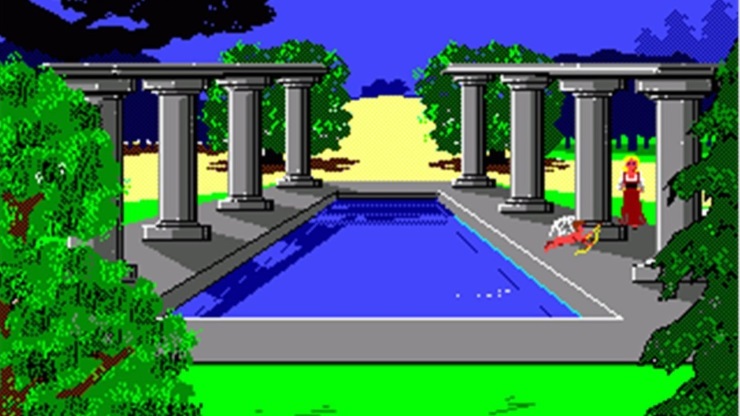
Kings QuestIn fact, the name Sierra On-Line was very apt as the company was one of the very first to embrace internet connectivity. Sierra ran chat rooms and gaming lobbies long before most gamers even knew what that meant – with their early card game collections and such including network play years before it was in vogue. The company was sadly crippled by over-expansion, repeated buy-outs and a major fraud case throughout the late nineties and early 2000′s, which led to their early extraction from the development side of gaming, to become a publishing house. Even then, they knew how to pick a hit, with Homeworld and Half-Life two of their publishing success stories.
It was incredibly sad to the collapse of this company who helped forge new paths and bring so much innovation to the table. Slowly they were marginalised by and more by successive buy-outs and mergers, until they were inevitably closed completely in late 2008. Not only did that signal the end of an era for the company, but also for such iconic games designers as Roberta Williams herself, Al Lowe, and the two Guys from Andromeda, amongst others – people who really shaped the point and click genre radically and had more to give, were it not for the untimely demise of the company.
And so it is with mixed feelings that I greet the first footage from King’s Quest: Your Legacy Awaits – the new re-imagining of the classic series by indie developers The Odd Gentlemen (of P.B. Winter bottom fame). Happiness because of the re-birth of a company that I grew up with, and which provided me with some of my earliest – and best gaming memories. But also with sadness and trepidation, that the iconic graphic adventure seems to have been turned into an action-adventure, platforming title. It looks graphically impressive, but remains to be seen whether it will recapture the core exploration and puzzling gameplay elements, or the spirit and atmosphere of those early, ground-breaking games that came before it. Ken and Roberta Williams really did give a lot to the gaming industry, and I only hope that the re-launch of the Sierra brand can do at least a little justice to their legacy.

Friday, 5 December 2014

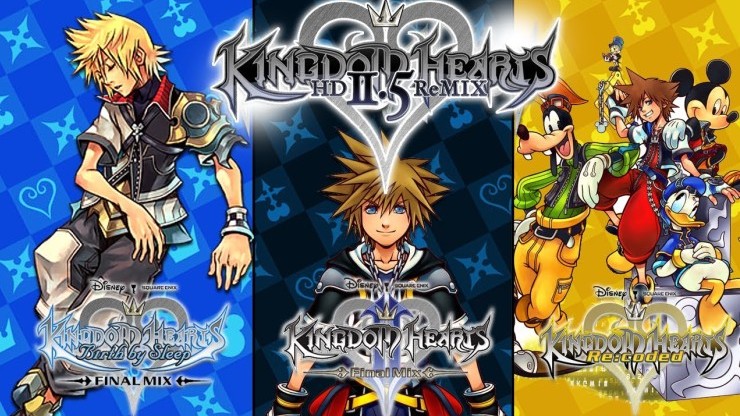
Kingdom Hearts 2.5 HD Remix Review

A strange combination of Final Fantasy and Walt Disney, Kingdom Hearts was always bound to stand out from other video games on the market. Although the action-RPG gameplay may not have been anything revolutionary, the two PlayStation 2 releases were big hits and a whole lot of fun to play through. It has been around twelve years since the first Kingdom Hearts was released now though, and despite there being a third game on the horizon (albeit perhaps a far 2017 horizon), there will be a good portion of console gamers who have lost track of the series, or never played any of it at all.
It is safe to say that, even if you thoroughly enjoyed both of the PlayStation 2 titles, you probably didn’t own every platform necessary to have played each and every game in the series. With editions released on PS2, DS, PSP, 3DS and mobile phones, the over-arching story has become difficult for the average gamer to follow – so it is definitely helpful that Kingdom Hearts fans can now experience the entire back catalogue (or nearly anyway) on PlayStation 3 alone.
 

Sunday, 16 November 2014

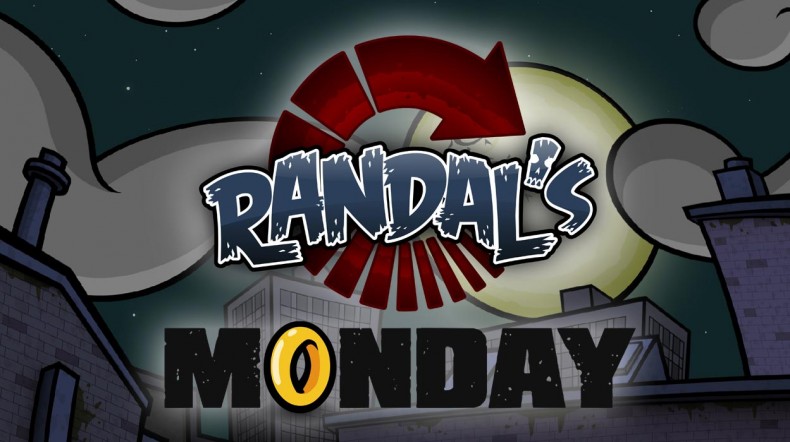
Randal’s Monday Review

You may be forgiven for thinking that Randal’s Monday is linked in some way to the Clerks films by Kevin Smith. The titular character Randal is a wise-cracking layabout, just like Randall in the Clerks series. The characters, activities and locations in the game constantly reference Star Wars and other cult movies and comics (just as in many Kevin Smith films), and the voice actor performing the character of Randal actually played Randall in Clerks. It is confusing therefore that the game has nothing to do with any of that.
Randal’s Monday is, however, a call-back to the classic adventure games of the nineties. Controlled in a point and click style, players can choose between a more traditional control method or a simplified user-friendly one. The game begins after your best friend “finds” a mysterious and seemingly-magical ring, when things start to go drastically wrong and Randal finds himself in a Groundhog Day time loop where he is trying to atone for his actions and to put right what once went wrong, one day at a time.
 

Monday, 3 November 2014

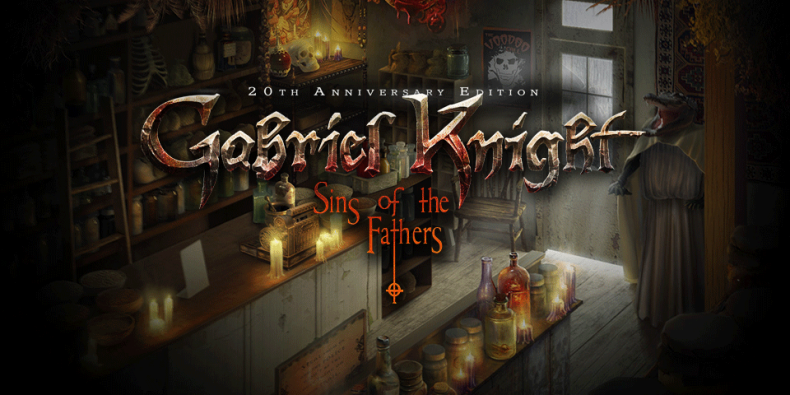
Gabriel Knight: Sins of the Fathers – 20th Anniversary Edition Review


When Jane Jensen created the first Gabriel Knight game back in 1993, it was rather unique. Whereas most point and click games of the time were comedies or fantasy adventures, Sierra took a chance with Sins of the Fathers, a horror thriller, grounded thoroughly in the real world. Jensen offered up a gritty, historically-rich tale, which captured the imagination of gamers and later spawned two sequels.
It is no surprise then, that the game has received a high definition makeover. The current trend in adventure gaming seems to be for re-releasing and re-mastering genre classics, making them available both to long-time fans and to a whole new audience. This time thankfully, the original creative forces behind the game are behind the new version too, so at least the project was in good hands.

Monday, 27 October 2014

The Shopkeeper Review

Interactive story-telling is somewhat en-vogue in gaming right now. In a title like The Wolf Among Us or The Walking Dead, for instance, there is a focus on storytelling and decision-making rather than traditional gameplay mechanics. The Shopkeeper takes that idea and pulls back even further in terms of interactivity, becoming a short-form choose your own adventure, where just a handful of different choices will guide the story in one direction or another.
The Shopkeeper presents us with a young businessman looking for an Antique to impress his Mother-in-Law. The titular Shopkeeper tells the story behind each item for sale in his store, and through a series of dialogue choices will explain the consequences of choosing one gift over the other. Pick the incorrect gift and the story will repeat itself, until the correct gift and conversational choices have been made and the credits roll.
 

Tuesday, 10 December 2013

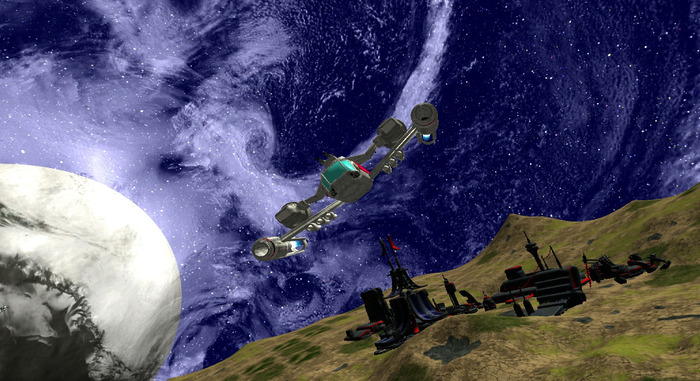
Star Quest 2: United Galaxies Preview


Towards the end of 1995, a small start-up video game developer named Virtual Adventures produced the space combat title Star Quest I in the 27th century. The game was self-published, entirely developed off the own backs of the team and sold directly too. The title garnered them quite a level of fame with hardcore PC gamers and led to the company signing a one-game publishing deal with Infogrames. Despite releasing another game named Stellar Mercenaries in 1997, Star Quest 2 was the game that Virtual Adventures really wanted to make.

So in 1998, production began on the sequel - which had ambitious plans to expand the game from a simple 3D space shooter, into a complex real-time strategy and space combat hybrid. They even had a full demo produced and running by 1999, but a lack of funding and no publishing deal unfortunately meant that the game had to be put into an indefinite hold - and sadly Virtual Adventures moved away from directly developing games and into the consultancy arena.

But as well all now know, the PC gaming environment has changed dramatically, and with crowd-funding websites like Kickstarter, small developers and individuals can now showcase their ideas and products directly to the fans that would be buying their games. This has led to Virtual Adventures finally being able to revive their hybrid game idea and Star Quest 2 has once again had new life breathed into it.


The main selling point of the title is that not only will it be a fully-realised real-time strategy game, where warring alien races from across the galaxy compete to conquer worlds, but also a direct combat game. Players will be able to build their armies and manage resources, directing battles from above as a Commander, but then also jump into the shoes of a ground troop or space pilot and get down and dirty in the action of a dogfight.

Part of the story behind the title is that the warring factions have tried to develop new ways of fighting, and new technology, in order to gain an edge over their enemies. This has led the most advanced races to eschew normal manned space ships and turrets, and to have entire armies of robotic drones and computer-controlled ships, all directed by one Commander in the Mothership. This has meant that as much as the actual battles themselves being important, the capturing of resources and manufacturing of technology has become just as important. Those who control the production and supply of war crafts, control the war.


So the foundations for a strong army in Star Quest 2 are built upon resource management and planning. This if, of course, very much in the mould of many popular real-time strategy titles. In Command & Conquer, for example, armies always relied on the successful harvesting of Tiberium, and here is no different. But what is different is how to fight when the player actually decides to go into war - which is very much their own path to choose, with the choice left to the player of what Solar Systems to explore and what strategy to employ to conquer each of them.

When you enter the battlefield as it were, you begin with an overview of the conflict, and take on the role of a Fleet Commander. Here you can mobilise units and give out orders - strategising and maneuvering your troops. This is very much as you would expect from an RTS. The game gets really different however when you realise that after sending out troops, you can then warp directly into the cockpit of one of the many warships at your disposal (ranging from four up to twenty-five, depending on the mission), or into a gunner who is trying to shoot down enemy ships from his gun emplacement.

You can actually get down onto the battlefield yourself and influence the direction of the battle, rather than simply sending out your troops and waiting to see how well they fare. This is an added dimension to the RTS formula, and lets gamers have a lot more input and say into how a battle will play out. No longer will you have to curse poor AI for not flying your ships well enough, as you can fly them yourself. And if you think your gunner isn't accurate enough, you can become him and show everyone how it should be done.


The game isn't only battles either. There are a variety of ground-based missions to take on, such as scavenging for resources and even racing against enemies and friends, to see who has the fastest fleet. Add to that the fact that there will be online multiplayer modes - which are very much focused on co-operative play, where one user could be a commander and others be ground troops - and there is a lot that will excite fans of the genre in Star Quest 2.

The game may not boast the stunning visuals of a Starcraft title, or the big-name actors that have peppered recent Command & Conquer games, but Star Quest 2 is looking to produce a new breed of real-time strategy game, where hands-on action is placed at the forefront. Not only that, but player choice is placed on a pedestal and gamers will really be able to carve out their own specific experience, based on their playing style and preferences. It may have taken almost a decade and a half to see the light of day, but Star Quest 2 still has plenty of fresh ideas.

If you wish to support the Star Quest 2 Kickstarter please click hereOn their official Kickstarter appeal page, the developers have posted both a video of the original demo from 1999, and some new and exciting footage from the updated version of the game. These videos can be found below:

New footage:


1999 Demo footage:

Friday, 6 December 2013

Scribblenauts Unlimited Review


When the first Scribblenauts title launched in 2009, it caused a stir in the gaming industry as it was unlike anything else on the market. The premise of the game was simple – the gamer was presented with a series of short levels, each of which are made up of relatively straightforward puzzles. The twist was that in order to solve those puzzles, you couldn’t just use items you found in-game, you had to create them yourself. Armed with your Nintendo DS stylus and a notepad in-game, you could write the name of an object which would then be created for you to use on-screen.
For instance, there might be a cat stuck up a tree – but how do you get it down? You could write the word “ladder”, and a ladder would appear for you to climb and save the cat. Or you might prefer to write “axe”, and cut down the tree. Further still, a jetpack would help you reach the cat even quicker. There were huge possibilities, although the game could only understand fairly simple objects and names. The concept evolved with Super Scribblenauts and a later Remix version, which added many more words to the in-game library, as well as the ability to add tags and adjectives to the words. Now you could use your stylus to create a blue house, or an angry Emu, for example.

Monday, 2 December 2013

Zoo Tycoon Review


It may not be the most glamorous title, but Zoo Tycoon is one of the few platform-exclusive games available on either next-generation console at launch. The game does itself no favours by appearing on the surface to be a strange hybrid between Frontier’s previous Xbox effort, Kinectimals, and another Children’s Kinect title, Kinect Disneyland Adventures. These comparisons certainly won’t endear Zoo Tycoon to many hardcore gamers or long-standing fans of the series, but this isn’t simply a motion-controlled kids game.
The story goes that Frontier were working on a new version of your common or garden Zoo Tycoon several years ago, making use of some ultra-realistic animal models. It was then that Microsoft asked them to put that on hold in order to work on Kinectimals, using their already-built animals and animations for the Kinect game. Years later, Frontier finally had the chance to build the game that they wanted, combining elements of their original vision and the interactivity of Kinectimals.

Monday, 18 November 2013

Morphopolis Review


New point and click puzzle game Morphopolis already comes with a lot of critical acclaim behind it. Before its release it has already won a Design Award from the Association of Illustrators, as well as being part of the special selection at Rezzed. Arriving with such high praise, gamers should expect big things from this hidden object title from first-time developers Micro Macro.
Morphopolis is concerned with an Aphid who wishes to re-unite with its lost companion – but in practice, there is no exposition or set-up to explain this. When playing, you are thrown straight into the first scene and in no way is any sort of narrative conveyed. This is disappointing, as the developers have mooted the title as being story-driven, but it most certainly isn’t. The only way I knew about the fact that there was even a narrative at all was from reading the developer’s blurb.

Wednesday, 13 November 2013

Deadfall Adventures Review


Embarking upon an expedition in the hopes of finding that one big pay-off is a romantic idea. Movies have long mined this genre, and video games too are well aware of its appeal, with Tomb Raider and Uncharted being obvious examples. It is Uncharted which is the clear influence behind Deadfall Adventures. Where Uncharted followed Nathan Drake, ancestor of explorer Sir Francis Drake, Deadfall Adventures follows a very similar pattern. Gamers this time step into the shoes of James Lee Quatermain, Grandson of the fictional original tomb raider, Alan Quatermain. James is a reluctant hero – a mercenary treasure hunter who shies away from the legacy of his Grandfather.
That is until Jennifer Goodwin – an agent of the U.S. Government – asks for his help in obtaining a series of artefacts that could help protect the free world, and which must be kept away from the villains of the piece, the Nazis. In true Indiana Jones style, the game plays off  Hitler’s real-life obsession with supernatural artefacts. So far, the story is very generic – being as hackneyed and unoriginal as you could imagine. This isn’t helped by uninspired dialogue that is delivered in a pretty lacklustre way. The story falls flat through this bad execution, and it certainly won’t grip you like the movies and books it is inspired by.